
Could the era of manual coding be over? If you ask the leadership at Spotify, the answer is a resounding “yes,” and Spotify AI coding is a game-changer.
During the company’s Q4 2025 earnings call this week, co-CEO Gustav Söderström dropped a bombshell that has the tech world buzzing: Spotify’s top-tier developers haven’t written a single line of code manually since December.
At Cais Technology, we’ve seen AI move from a “fun assistant” to a “core employee” over the last year, but Spotify’s latest revelation marks a massive shift in how the world’s biggest apps are actually built.
Meet “Honk”: Spotify’s Secret AI Weapon
So, if they aren’t typing, what are they doing? Spotify engineers are now using an internal system nicknamed “Honk.” This platform acts as a high-speed bridge between the developer’s intent and the final product. It leverages Claude Code (from Anthropic) to handle the heavy lifting. Instead of staring at a blinking cursor in a code editor, engineers are now “orchestrating” the app through Slack.
“An engineer on their morning commute can tell Claude via Slack to fix a bug or add a new feature to the iOS app,” Söderström explained. “By the time they finish their commute, a new version of the app is pushed to their phone for review.”
From “Bricklayers” to “Architects”
This doesn’t mean Spotify is firing its engineers. Instead, their roles have fundamentally changed.
-
The AI handles the syntax, the repetitive “boilerplate” code, and the initial bug fixing.
-
The Human acts as the architect and editor, focusing on high-level design, security, and making sure the feature actually makes sense for the user.
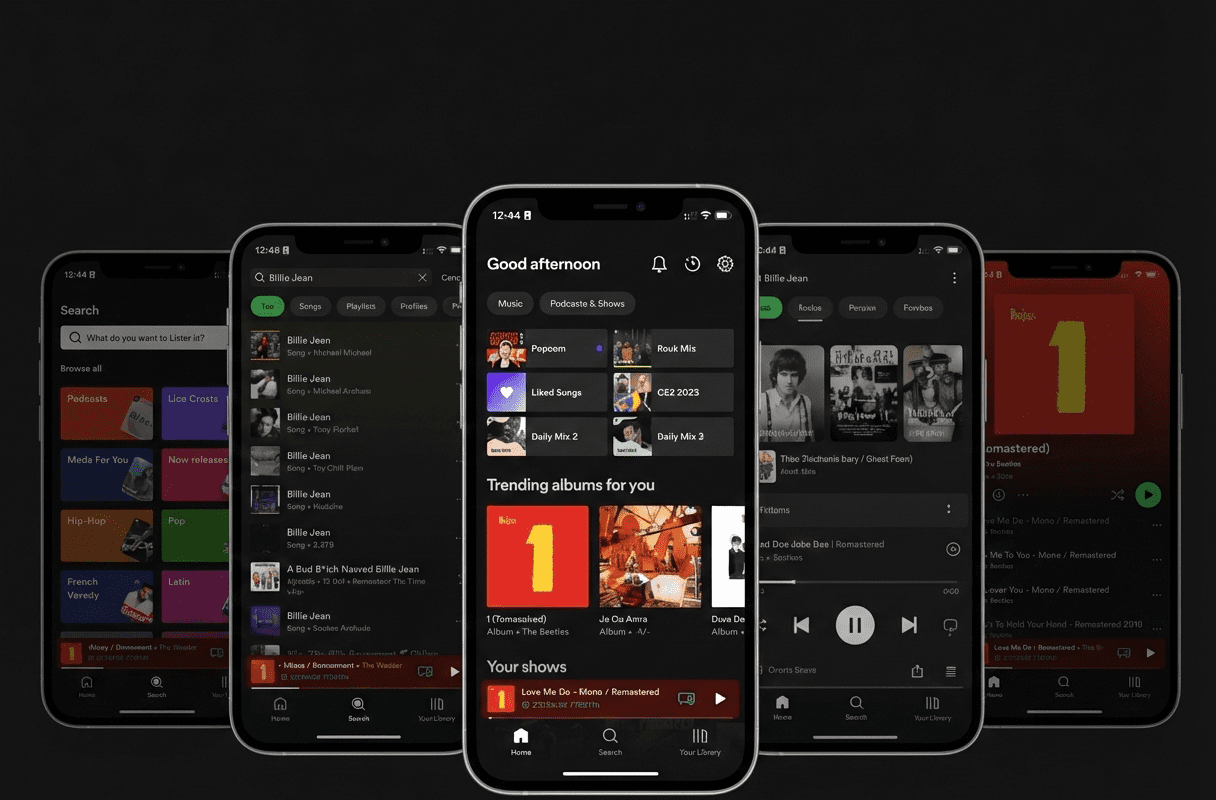
This “Vibe Coding” approach has allowed Spotify to ship over 50 new features in 2025 alone, including the new AI-powered Prompted Playlists and “About This Song” credits.
Why This Matters for the Industry
Spotify is proving that AI isn’t just about speed; it’s about removing friction. When you can deploy code from your phone while sitting on a train, the “bottleneck” of human typing speed disappears.
However, this shift also brings up big questions. If the best devs aren’t coding, how do junior developers learn the craft? And what happens when the AI makes a mistake that a “supervisor” misses?
At Cais Technology, we believe we are entering the “Supervisor Era” of software. The value is no longer in how you code, but in what you decide to build.
MORE On Mobile Technology Updates
-
EU Demands TikTok End Infinite Scroll and Addictive Design
-
iPhone Fold vs iPhone 18 Pro: The Battle of Cameras and Battery Life
-
Gizmo App Review: Turn Your Doomscrolling Into Creative Play